
Why You May Carry Tension in Your Jaw, Neck, and Shoulders
Jaw, neck, and shoulder tension often builds gradually during demanding days. Stress, posture, screen time, fatigue, and jaw clenching may all play a role. Learning to notice these patterns gently can help you respond earlier, without assuming that every ache is caused by stress.


You finish a long stretch of work and only then notice what has been happening in your body.
Your jaw feels tight. Your shoulders have drifted upward. Your neck feels stiff, and the thought of "just relaxing" sounds easier than it actually feels.
This pattern is extremely common.
The jaw, neck, and shoulders are often the places where everyday pressure shows up most clearly. That does not mean every uncomfortable sensation is caused by stress. It also does not mean your body is doing something wrong.
More often, it means that several ordinary factors have been building quietly at the same time: posture, screen time, clenching, fatigue, shallow breathing, and emotional load.
Understanding that pattern can help you respond earlier and more gently.
Why these areas often hold tension
The jaw, neck, and shoulders are involved in many things we do all day.
They help support the head, stabilize posture, assist with breathing, and react quickly when we are concentrating, bracing, or under pressure.
When a day feels demanding, many people unconsciously tighten these areas. You may press your teeth together while focusing, lean forward toward a screen, lift your shoulders slightly, or hold your breath without noticing.
None of these responses is unusual on its own. The issue is repetition.
When small amounts of tension are repeated for hours or days, the body may start treating them as a normal pattern.
Everyday factors that may contribute
Tension in the jaw, neck, and shoulders is rarely caused by one thing alone. It often reflects a combination of habits and circumstances.
Stress and emotional pressure
Stress can change the way the body holds itself.
During a busy or emotionally demanding period, you may become more rigid without realizing it. Your shoulders may rise, your neck may stiffen, and your jaw may tighten.
For some people, this happens during deadlines or difficult conversations. For others, it appears more quietly after several demanding days in a row.
Screen time and posture
Modern life asks a lot from the upper body.
Looking at a laptop, phone, or tablet for long periods can encourage a forward-leaning position. The head moves slightly in front of the body, and the muscles around the neck and shoulders work harder to support it.
This does not mean posture needs to be perfect. It simply means that long periods in one position may contribute to tension.
Jaw clenching
Many people clench their jaw during concentration, stress, or sleep without realizing it.
You may notice it while answering emails, driving, or trying to get through a difficult task. Some people also wake up with jaw tightness because of nighttime clenching or grinding.
The more often the jaw is held tightly, the more normal that pattern can start to feel.
Changes in breathing
Breathing and muscle tension often influence each other.
When you feel stressed, distracted, or rushed, breathing may become shallower or less comfortable. In those moments, the muscles around the neck and shoulders may become more active.
You do not need to monitor your breath constantly. But it can be useful to notice whether difficult moments tend to come with tighter breathing and more upper-body tension.
Fatigue
Tired bodies often hold themselves differently.
After poor sleep or a long day, you may feel less able to move freely or reset your posture naturally. This can make tension feel heavier and more persistent.
Fatigue can also make small discomforts feel more noticeable.
Why tension can build gradually without being noticed
One reason upper-body tension feels so frustrating is that it often develops quietly.
You may not notice the exact moment when your jaw began to clench or your shoulders began to rise. Instead, you notice it later, when the stiffness is already there.
That happens in part because attention is limited.
When you are focused on work, caregiving, commuting, or solving problems, subtle body signals are easy to miss. The body may be communicating, but your mind is busy elsewhere.
This is where body awareness can help. Body awareness is not about scanning constantly for problems. It is about learning to notice earlier when a familiar pattern is beginning.
Helpful awareness vs. over-monitoring
If you already tend to worry about physical sensations, it is important to approach this gently.
The goal is not to keep checking your jaw every five minutes or to become overly focused on every small change in your neck or shoulders.
A more helpful approach is periodic awareness — for example, after a long work session, during a short break, before getting in the car, or at the end of the day.
At those moments, you can ask: are my teeth pressed together, are my shoulders lifted, does my neck feel stiff or tired, have I been sitting in the same position for a long time.
That kind of brief check-in can be useful without turning into anxious monitoring.
Gentle ways to ease tension during an ordinary day
These practices are not meant to fix everything. They are simple, low-pressure ways to respond when you notice tension building.
1. Let your teeth separate
At rest, your teeth do not need to be pressing together.
If you notice clenching, allow a little space between your upper and lower teeth. Let your jaw feel heavier and less effortful.
You are not trying to force the jaw open. You are simply reducing unnecessary pressure.
2. Lower your shoulders
Pause and notice where your shoulders are.
If they have crept upward, let them drop naturally. Loosen your hands. Allow your arms to feel heavier.
A small release can make a bigger difference than a forceful stretch.
3. Change position
If you have been sitting for a long time, stand up.
Walk for a minute, change rooms, or roll your shoulders gently. Sometimes the most helpful response is simply interrupting the position you have been holding.
You do not need a full exercise session to reset the body.
4. Take a comfortable breathing pause
Notice your next few breaths.
If your breathing feels rushed or tight, let the next breath become a little slower and easier. There is no need to breathe deeply in a dramatic way.
The goal is ease, not performance.
5. Use a gentle release practice
You can help your body notice the difference between holding and releasing.
For example, lift your shoulders slightly for a moment, then let them soften. Or press your jaw together lightly, notice the effort, and then release it.
Keep the movement small and comfortable.
6. Build small reminders into the day
Tension often becomes visible only after it has built up.
A useful strategy is to attach a quick body check to something you already do — such as after sending an email, when refilling your water, before a meeting, or when closing your laptop.
These tiny reminders help turn body awareness into a normal part of the day, rather than a separate task.
When to seek professional advice
Everyday tension is common, but there are times when symptoms should be professionally evaluated.
Speak with a qualified healthcare professional if you notice persistent or worsening pain, jaw clicking or locking, difficulty chewing, numbness or tingling, radiating pain, or frequent severe headaches.
It is also important to seek professional advice when symptoms interfere with sleep, work, or daily functioning, or when tension is accompanied by significant emotional distress.
Body awareness should support curiosity, not replace care.
Final thought
Tension in the jaw, neck, and shoulders is often the result of everyday accumulation rather than one dramatic cause.
A demanding day, long hours at a screen, tiredness, clenching, and subtle stress can all add up.
You do not need to monitor your body constantly or force it into perfect relaxation.
Often, a brief pause, one neutral observation, and one small act of release are enough to begin shifting the pattern.
Explore further: How Stress Can Show Up in the Body·What Is Body Awareness and Why Does It Matter?·Daily Habits for a Calmer Nervous System
Educational Disclaimer
This content is for informational and educational purposes only. It is not intended as medical advice and does not replace professional consultation. Always speak with a qualified healthcare provider before making changes to your health routine.
A Practice to Try
A short guided practice connected to this topic.
The Power To Let Go & Be Loved For All That You Are
Beginner
A gentle guided meditation focused on letting go, softening inward, and reconnecting with a sense of self-acceptance and emotional ease.
This practice is for educational purposes only and is not medical advice. If you feel unwell or have a medical condition, consult a qualified healthcare professional before starting any new practice.
Related Reading

Daily Habits for a Calmer Nervous System
You cannot think your way to a calmer nervous system. But you can build it — through small, consistent daily habits that signal safety to your body and gradually shift your baseline.

What Is Body Awareness and Why Does It Matter?
Body awareness is the ability to notice internal signals such as tension, hunger, fatigue, and changes in breathing without becoming overly focused on them. Learning to recognize these signals earlier can help you respond to stress with more care and less pressure.

How Stress Can Show Up in the Body
Stress is not only a mental experience. It may also show up through muscle tension, changes in breathing, fatigue, restlessness, sleep disruption, or digestive discomfort. Learning to notice patterns gently can help you respond earlier without assuming that every symptom is caused by stress.
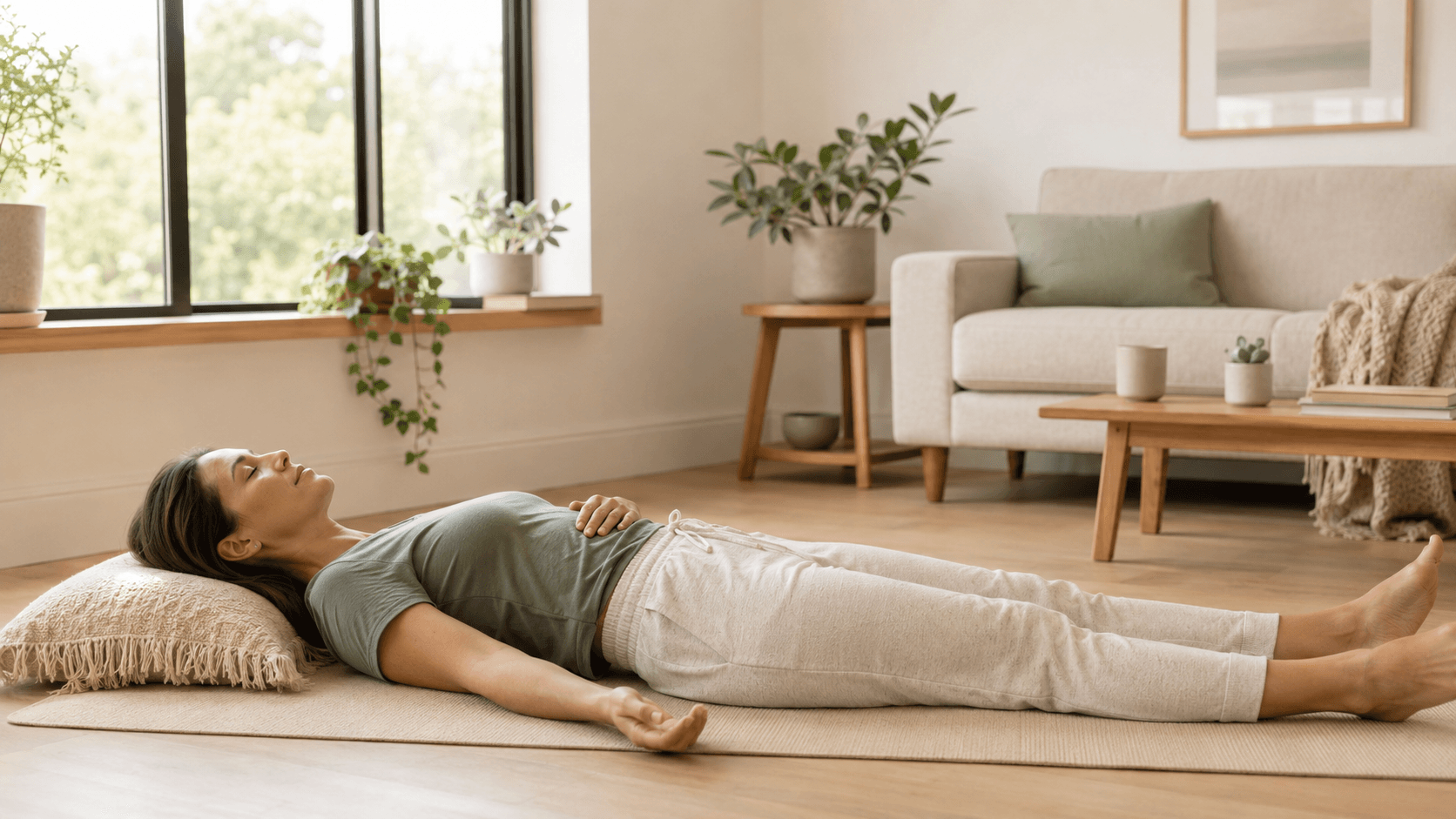
A Beginner's Guide to Body Scanning
A body scan is a simple way to pause and notice what is happening in your body without trying to fix every sensation. This beginner-friendly guide offers a calm 3–5 minute practice you can use during ordinary days.

Continue exploring
Discover guides, supplements, books, and practical resources for stress & mental balance.