
How to Read U.S. Nutrition Facts Labels Without Getting Lost in Marketing Claims
Marketing claims can be distracting. A few simple checks on the U.S. Nutrition Facts label can make packaged-food choices easier to compare.
Quick Summary
- Start with serving size and servings per container before comparing nutrient numbers.
- For the U.S. Nutrition Facts label, 5% DV is low and 20% DV is high.
- Compare foods for fibre, sodium, saturated fat, and added sugars where relevant.
- Use the ingredient list to check what a product is mostly made of.
- Treat labels as information tools, not a reason to label foods as good or bad.
Full Article
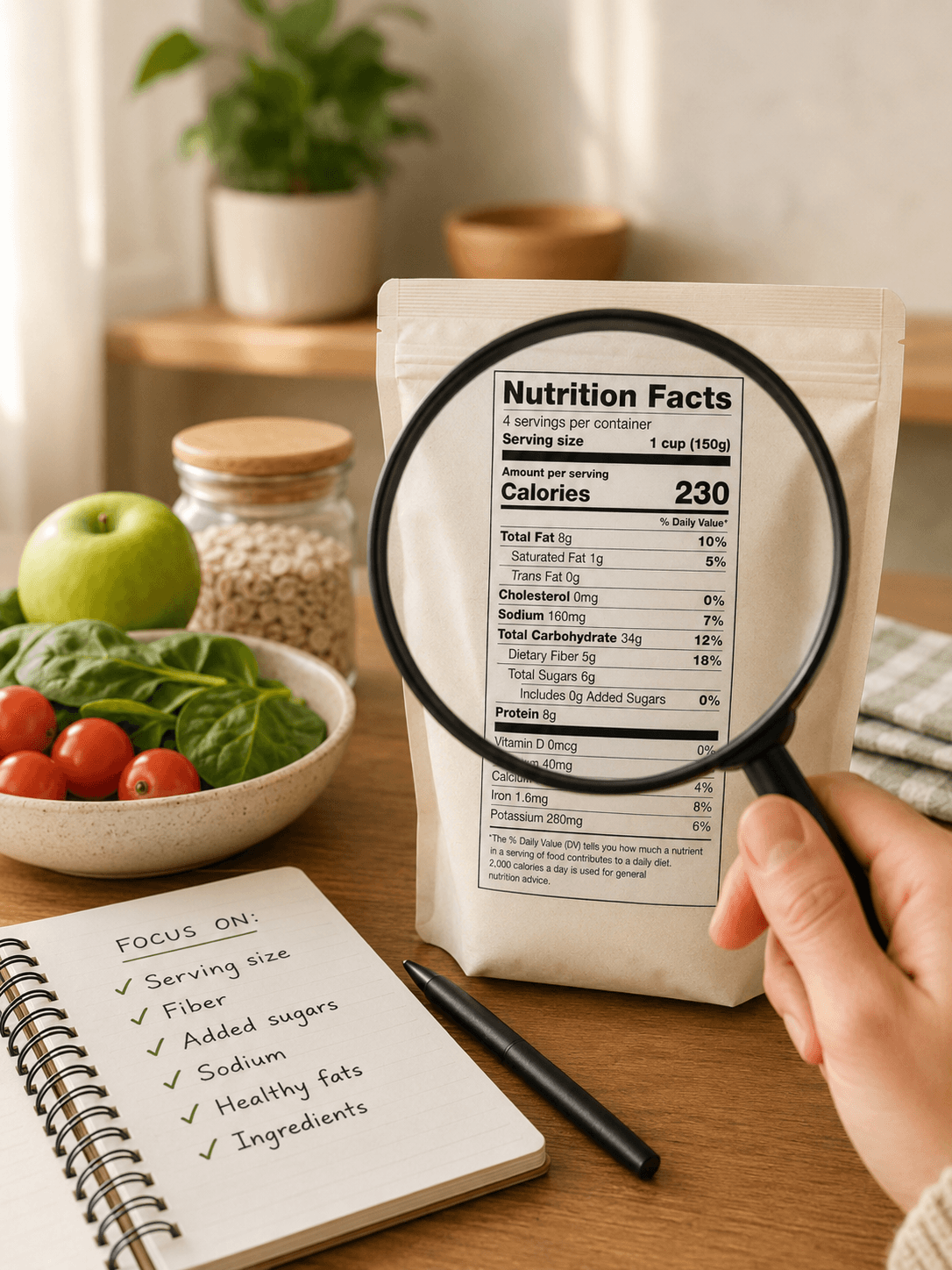
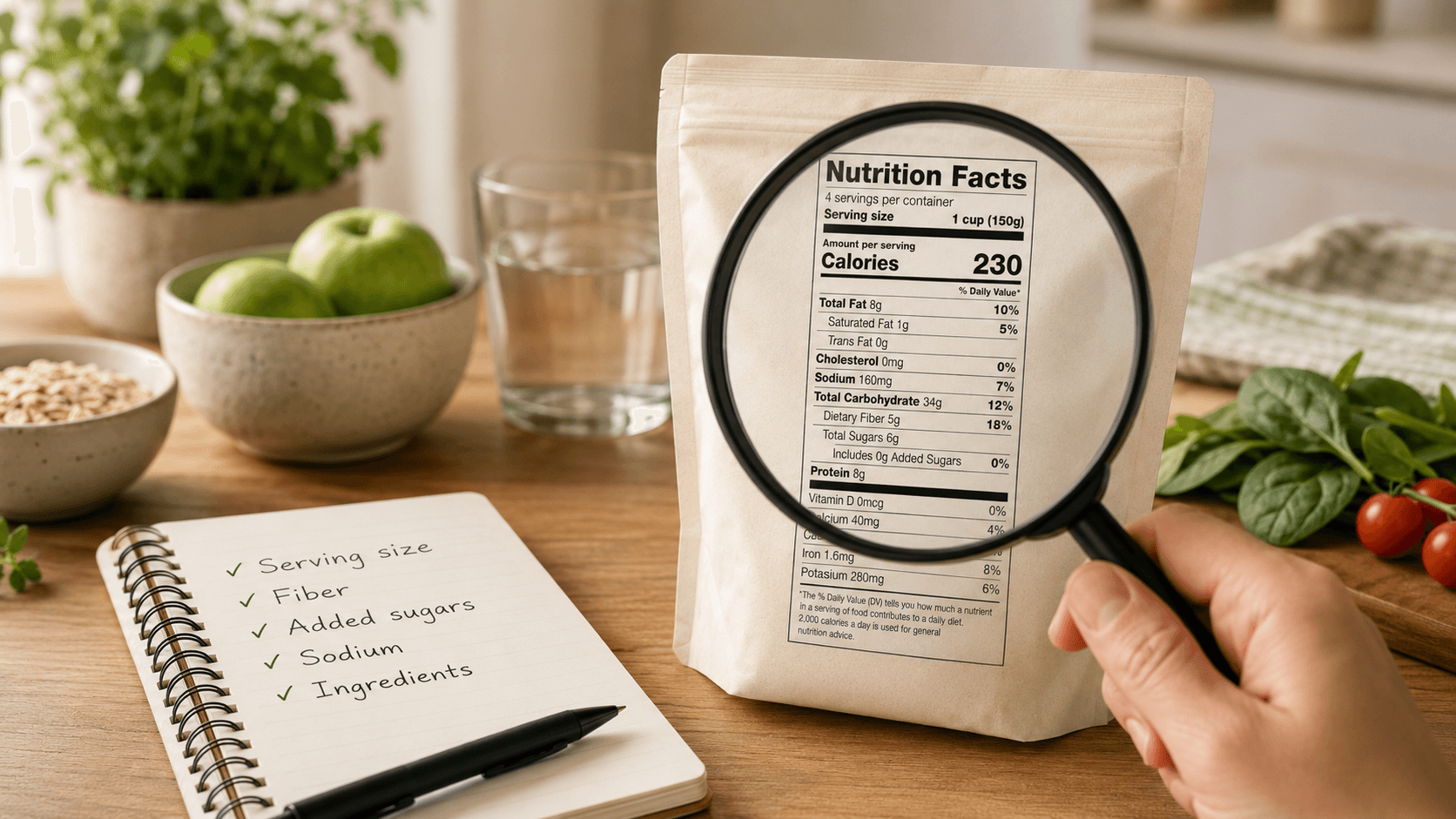
Packaged foods often lead with bold phrases such as “high fibre,” “natural,” or “low fat.” These claims can be useful starting points, but they do not tell the full story. For products sold in the United States, the Nutrition Facts label offers a standard way to compare what is actually in a serving.
Start with serving size
Serving size is the basis for every number on the label. It is not a recommendation for how much you should eat; it reflects an amount people typically consume. Check the number of servings in the package too. If you eat two servings, you are getting twice the calories and nutrients listed for one serving.
Use % Daily Value as a comparison tool
The % Daily Value, or %DV, shows how much a nutrient in one serving contributes to a daily diet. On the U.S. Nutrition Facts label, 5% DV or less is considered low and 20% DV or more is considered high. This is a U.S.-specific guide, so it should not be assumed to apply to food labels in other countries.
Look for nutrients you may want more of
Depending on your needs, the label can help compare foods for fibre, vitamin D, calcium, iron, and potassium. When choosing between similar products, a higher %DV for fibre can be one useful signal, alongside ingredients, cost, taste, and how the food fits into the rest of your meal.
Notice nutrients that are often limited
The same label can help you compare saturated fat, sodium, and added sugars. The distinction between total sugars and added sugars is especially useful: total sugars include naturally occurring sugars in foods such as fruit or milk, while added sugars are included during processing.
Read the ingredient list
Ingredients are listed by weight, from the largest amount to the smallest. This can help you check whether a front-of-package claim matches the food itself. For example, if a bread is marketed as whole wheat, whole-wheat flour should appear near the beginning of the ingredient list.
Skill to Try
Food labels are tools, not moral scorecards. They can help you make clearer comparisons, while leaving room for your preferences, budget, and the wider pattern of what you eat.
This article is for general wellness education and is not medical advice. For nutrition guidance related to a health condition, medication, or individual dietary need, consult a qualified healthcare professional.
Educational Disclaimer
This content is for informational and educational purposes only. It is not intended as medical advice and does not replace professional consultation. Always speak with a qualified healthcare provider before making changes to your health routine.
Sources & Further Reading
Related Reading
How to Build a Balanced Plate Without Overthinking Every Meal
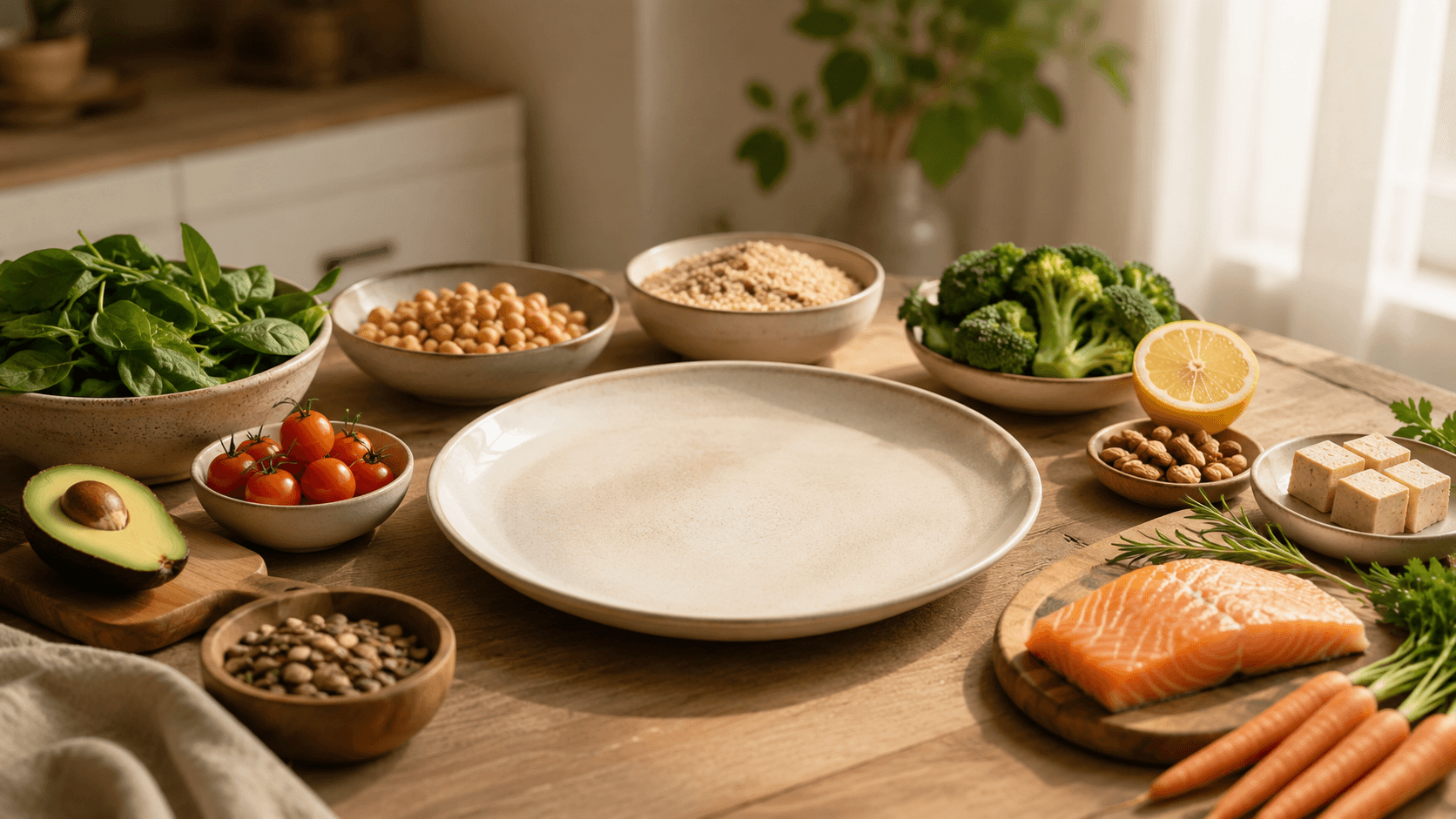
Healthy eating is best viewed as a pattern over time, not a rigid rule for every bite. A simple visual framework can make everyday meals easier to assemble.
Protein, Fiber, and Unsaturated Fats: A Practical Guide to Everyday Meals
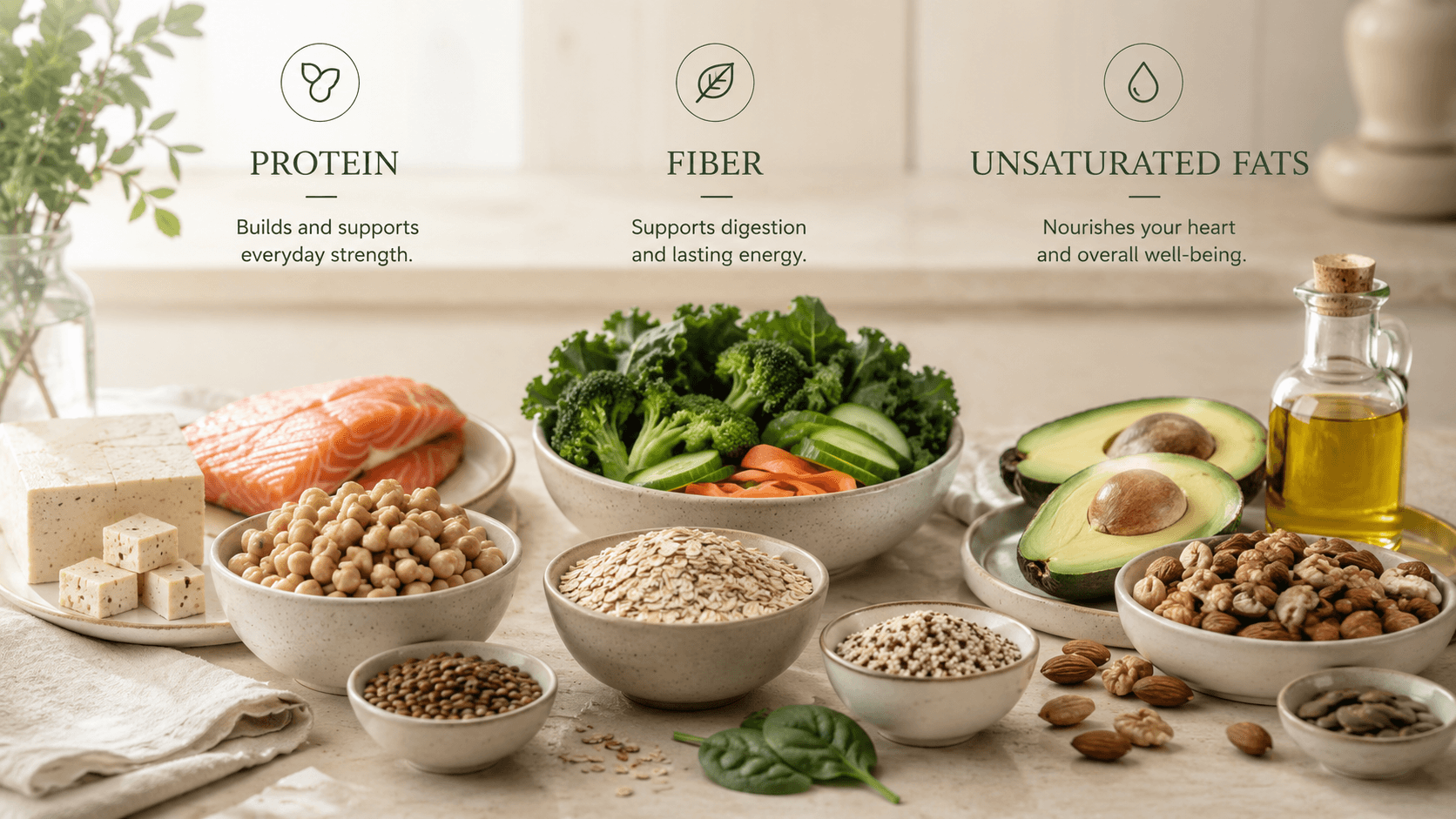
Protein, fibre, and unsaturated fats can make meals more satisfying and varied. Here is how to recognise them and combine them in everyday cooking.
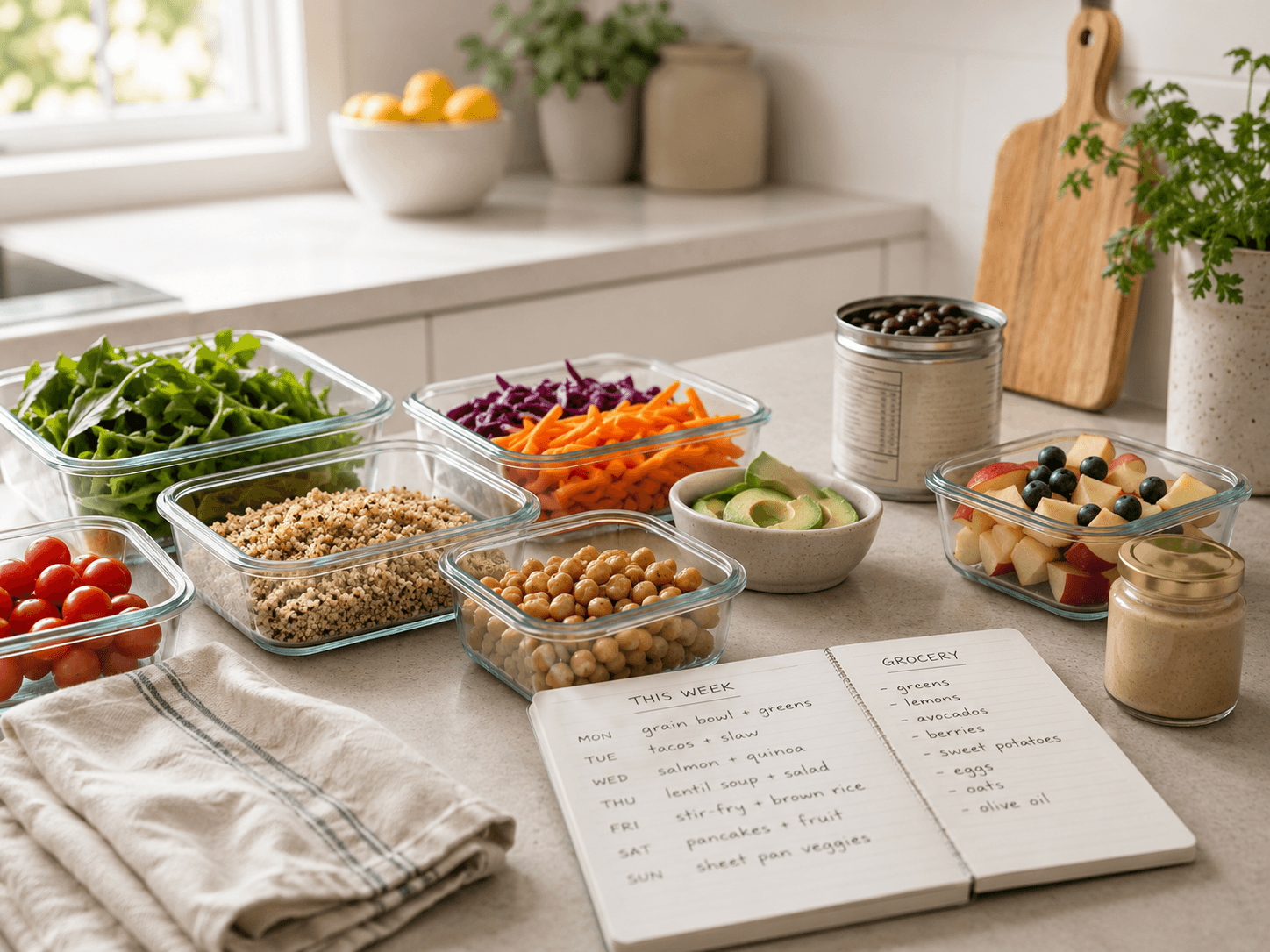
Small Nutrition Habits That Make Eating Well Easier During Busy Weeks
When time is tight, the goal is not perfect meal preparation. A few practical shortcuts can make everyday food choices easier and less stressful.

Continue exploring
Discover guides, supplements, books, and practical resources for stress & mental balance.