
Breathing Exercises Before Bed: A Gentle Way to Wind Down
A short breathing practice can create a quieter transition between a busy day and bedtime. Learn how to explore gentle breath awareness and a softer exhale without rigid counting, force, or pressure to fall asleep.
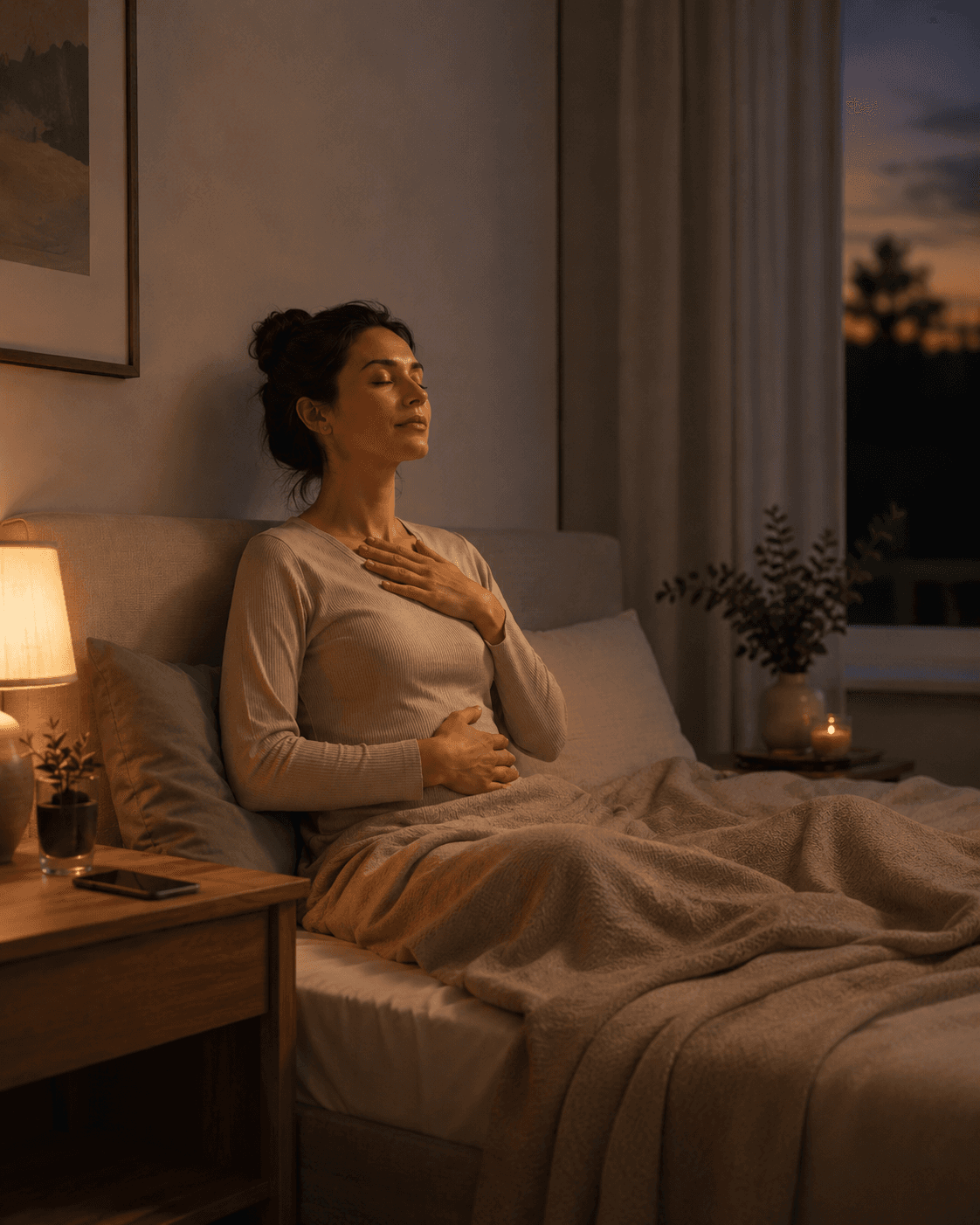
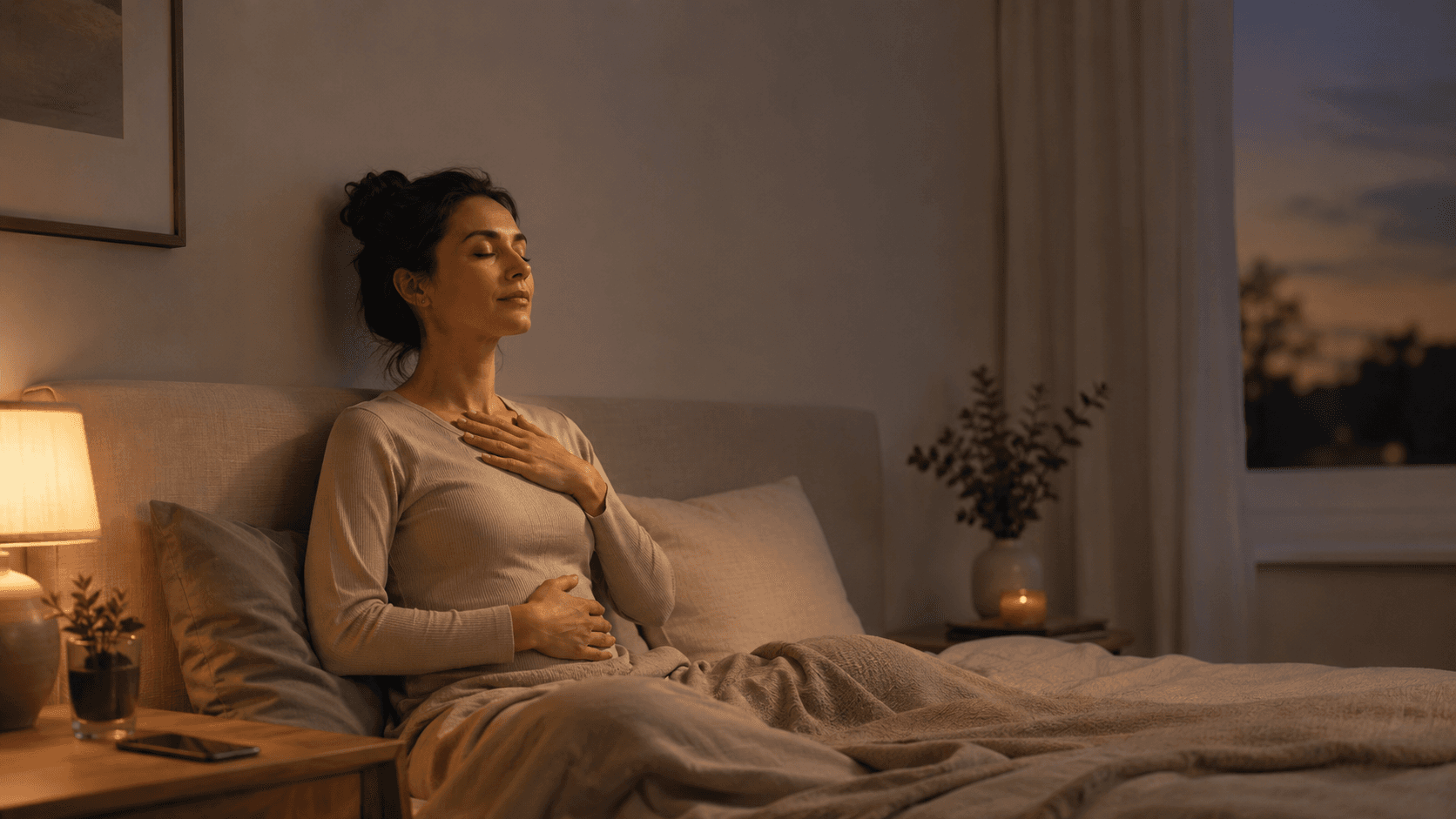
Moving from a busy day into a restful evening is not always a simple switch.
Even after work is finished and the lights are dimmed, the mind may still be reviewing conversations, unfinished tasks, or tomorrow's plans. Screens, notifications, and constant stimulation can make it harder to feel that the day is truly slowing down.
A short breathing practice can offer a gentle transition. The goal is not to force yourself to fall asleep. It is simply to create a few quieter minutes between the demands of the day and the rest of the night.
A Transition, Not a Treatment
Breathing exercises can be a useful part of an evening routine, but they are not a treatment for insomnia or other sleep disorders.
Research suggests that slow, comfortable breathing practices may support relaxation and help some people feel less stressed. However, people respond differently. A technique that feels calming for one person may feel uncomfortable or distracting for someone else.
It is also normal to have occasional nights when a breathing exercise does not make a noticeable difference.
The aim is not to "fix" sleep in a few minutes. Think of evening breath work as one possible way to create a softer transition into rest.
Persistent or severe sleep difficulties deserve professional attention. Breathing practices can be part of a broader wellness routine, but they should not replace medical guidance when sleep problems continue or significantly affect daily life.
Why the Breath May Feel Different After a Busy Day
Breathing patterns naturally shift throughout the day.
During physical activity, the breath becomes faster to meet the body's changing needs. During stressful moments, it may also become quicker, shallower, or less regular. Sometimes this pattern continues even after the stressful moment has passed.
A busy evening can make this more noticeable. Moving directly from work emails, news, or scrolling on a phone into bed may leave little space for the body and mind to settle.
This does not mean that your breathing pattern is "wrong." It simply means that the breath can reflect what is happening around you and within you.
Paying gentle attention to the breath may help create a pause before sleep.
Why Softness Matters More Than Depth
Many people assume that a breathing exercise requires the deepest possible inhale.
But a large, forceful breath is not always a relaxing breath. Trying too hard can create tension in the chest, shoulders, or abdomen. It may also make the exercise feel like another task to perform correctly.
For an evening practice, a smaller and quieter breath is often more comfortable.
You do not need to fill your lungs as much as possible. You do not need to push your abdomen outward. You do not need to achieve a perfect rhythm.
Instead, allow the breath to move at a pace that feels natural and easy. The intention is to reduce effort, not add more of it.
Choosing a Comfortable Pace
Slow breathing is often explored in research at a pace of approximately five to six breaths per minute. This is a useful research range, but it is not a universal target.
Some people find a slower rhythm comfortable. Others may feel that they need to breathe a little more frequently. Both responses can be completely reasonable.
Rigid counting can also make relaxation harder. If you become preoccupied with timing every inhale and exhale, the practice may begin to feel like an assignment rather than a pause.
A comfortable rhythm is more important than reaching a specific number.
If slowing down creates tension, air hunger, or a strong urge to take a larger breath, return to your normal breathing pace.
Practice 1: A Breath-Awareness Practice (2–3 Minutes)
Begin without trying to change anything.
Let your breath move naturally and notice where you feel it most clearly. You might notice movement in the chest, the lower ribs, the abdomen, or the air passing through the nose.
Observe the breath for a few moments:
- Is it quiet or noticeable?
- Does it feel smooth or slightly uneven?
- Does your body feel supported in its current position?
Practice 2: A Gentle Longer-Exhale Practice
Once you feel comfortable, experiment with making the exhale slightly softer and a little longer than the inhale.
There is no need to use exact counts.
Breathe in gently through the nose if that feels comfortable. Then allow the breath to leave without pushing the air out. Let the exhale feel like a gradual release rather than an effort.
The difference between the inhale and exhale can be small. You do not need to stretch the breath or hold it.
Try this for a few cycles, then return to natural breathing and notice how you feel.
When to Return to Natural Breathing
A breathing practice should not feel like a struggle.
Stop the exercise and return to your normal breathing rhythm if you experience any of the following:
- dizziness or light-headedness
- discomfort or increased anxiety
- a strong sense of air hunger
- unusual shortness of breath
Building a Realistic Evening Habit
An evening practice does not need to be long.
Two or three minutes may be enough to begin. You could try it:
- after putting your phone aside
- before turning off the lights
- after reading a few pages of a book
- while sitting quietly at the edge of the bed
- as part of a broader wind-down routine
A Quiet Bridge Into Rest
Breathing exercises before bed are not a way to control sleep.
They are a way to create a little more space between activity and rest.
By keeping the breath soft, comfortable, and unforced, you can explore a calmer ending to the day — without needing to achieve a specific pace, follow a perfect routine, or expect an immediate result.
Explore further: Breath Work 101: A Beginner's Guide·Why Your Heart Rate Changes When You Breathe·How to Build an Evening Routine for Better Sleep
Educational Disclaimer
This content is for informational and educational purposes only. It is not intended as medical advice and does not replace professional consultation. Always speak with a qualified healthcare provider before making changes to your health routine.
Sources & Further Reading
- Fincham, G. W., et al. (2023). Effect of breathwork on stress and mental health: A meta-analysis of randomised-controlled trials.
- Zaccaro, A., et al. (2018). How Breath-Control Can Change Your Life: A Systematic Review of Psycho-Physiological Correlates of Slow Breathing.
- Steffen, P. R., et al. (2017). The Impact of Resonance Frequency Breathing on Measures of Heart Rate Variability, Blood Pressure, and Mood.
- Laborde, S., et al. (2022). Research on voluntary slow breathing and vagally mediated heart rate variability.
A Practice to Try
A short guided practice connected to this topic.
Nervous System Reset | Guided Breathwork
Beginner
A guided breathwork practice designed to help you explore short, intentional breathing patterns and return to a calmer state. This practice may support a sense of reset and nervous system awareness.
This practice is for educational purposes only and is not medical advice. If you feel unwell or have a medical condition, consult a qualified healthcare professional before starting any new practice.
Related Reading
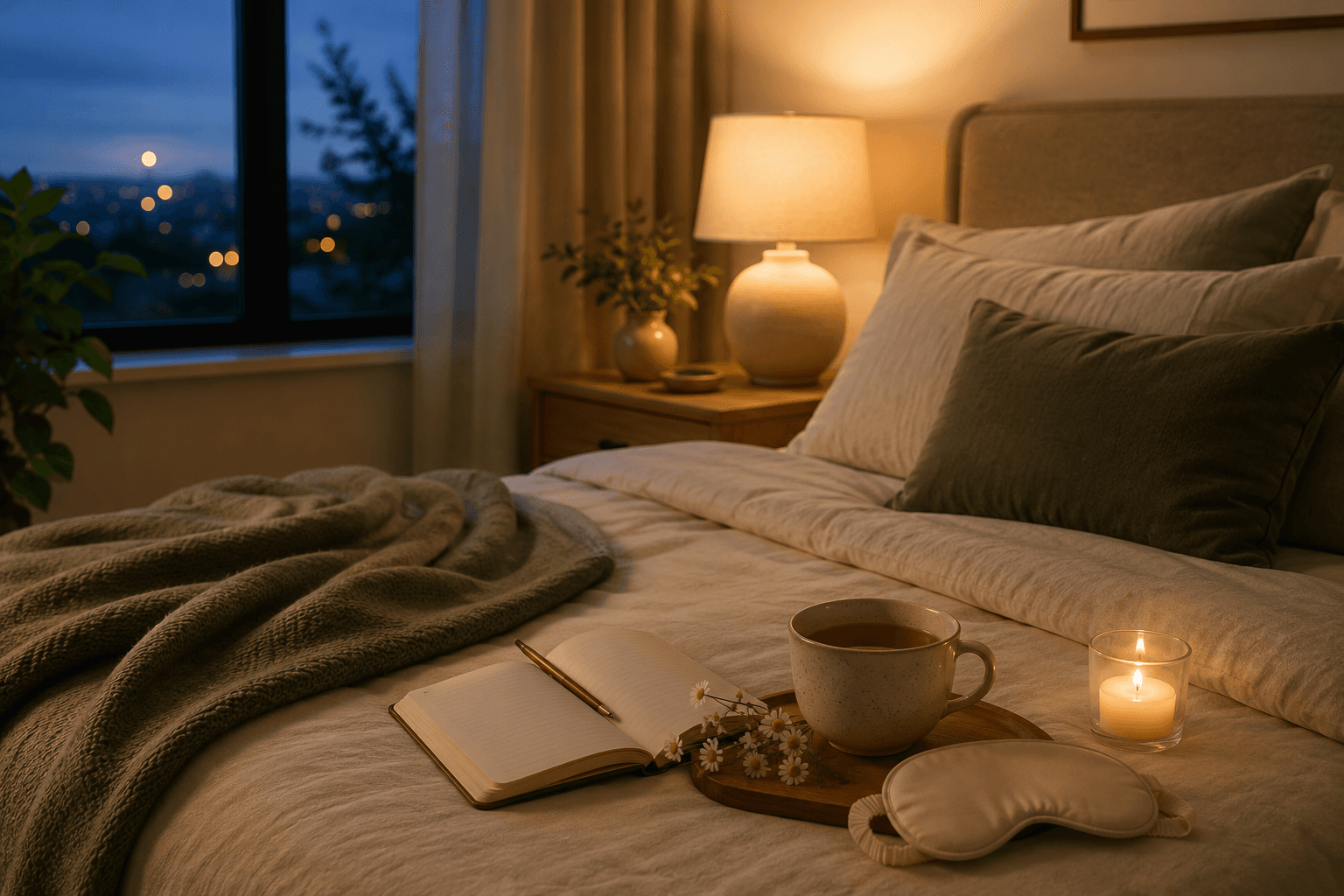
How to Build an Evening Routine That Supports Better Sleep
Better sleep does not begin the moment your head touches the pillow. A realistic evening routine can help the body move gradually from daily alertness toward rest.
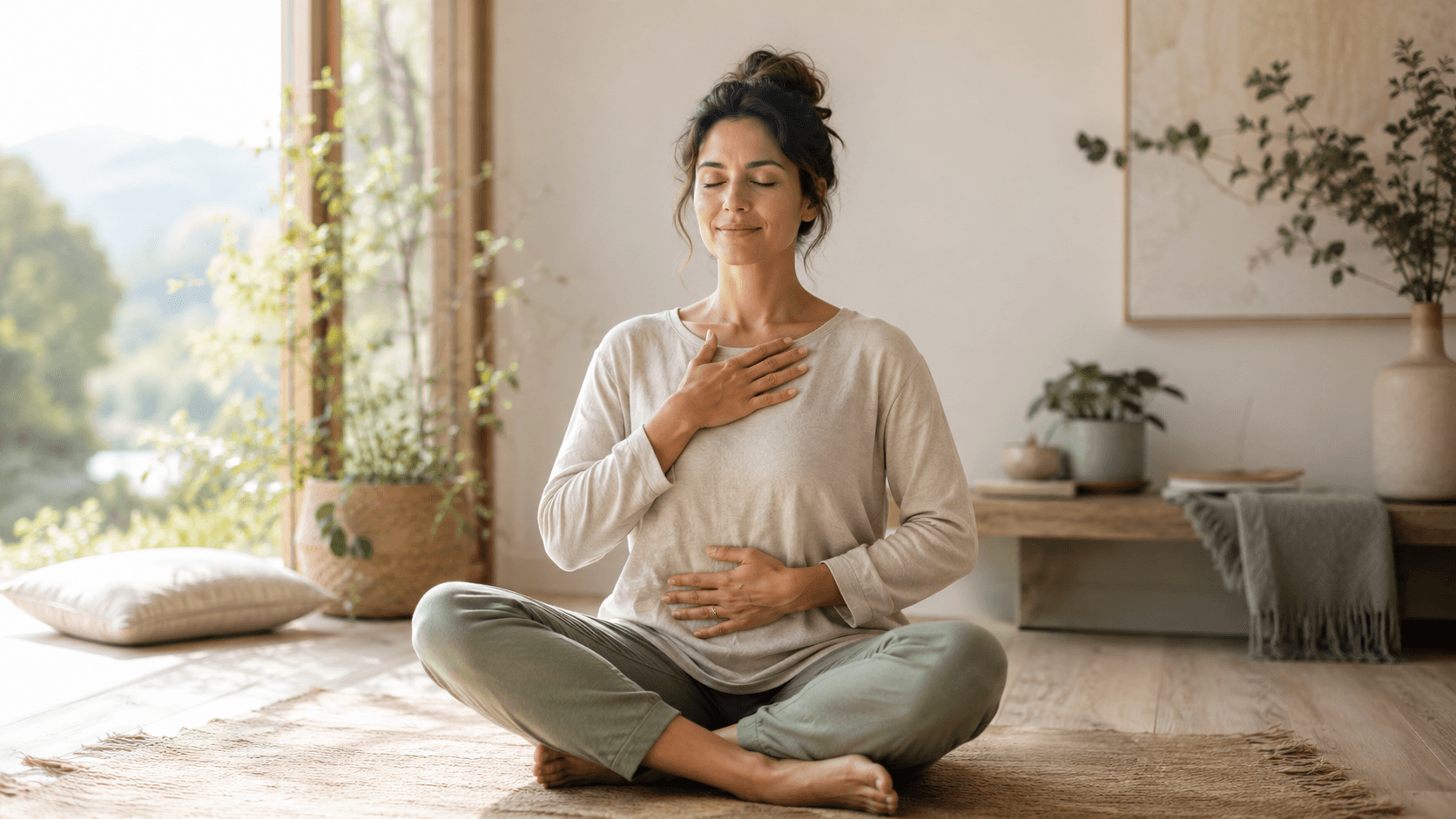
Breath Work 101: A Beginner's Guide to Conscious Breathing
Breathing is both automatic and voluntarily adjustable. This beginner's guide explains how gentle breathing practices may support stress regulation, heart rhythm and body awareness — without forcing the breath or chasing a perfect technique.

Why Your Heart Rate Changes When You Breathe
Your heart rate is not a steady metronome. This guide explains how breathing naturally changes the timing between heartbeats, what HRV and RSA mean, and why comfortable slow breathing may support regulation without chasing a perfect number.

Continue exploring
Discover guides, supplements, books, and practical resources for stress & mental balance.