
Ashwagandha: What the Research Actually Says
Ashwagandha is one of the most visible herbs in the wellness world. But what does the evidence actually say about stress, sleep, and anxiety — and where does it fall short?


Ashwagandha has become one of the most visible herbs in the wellness world. It appears in conversations about stress, sleep, energy, and everyday balance. It is also increasingly included in supplement blends that promise a calmer mind or a more resilient body.
But popularity is not the same as certainty.
Ashwagandha is not a miracle solution, and the research is not simple enough to support every claim made online. At the same time, it would be unfair to dismiss it as just another wellness trend. Several studies have found encouraging results, particularly in relation to stress and sleep.
So what does the evidence actually tell us?
What Is Ashwagandha?
Ashwagandha, also known by its botanical name Withania somnifera, is an evergreen shrub that has been used in traditional Ayurvedic medicine for centuries. Modern supplements may contain extracts derived from the root, the leaves, or a combination of both.
The plant contains several bioactive compounds, including a group known as withanolides. These compounds are often discussed in relation to ashwagandha's potential effects, but researchers have not established that any single compound fully explains how the plant may work.
This matters because ashwagandha is not one standardised ingredient. Two supplements may use different plant parts, extraction methods, concentrations, and formulations. A positive result from one study cannot automatically be applied to every product on the shelf.
What Does the Research Say About Stress?
Stress support is one of the main reasons people become interested in ashwagandha.
Several clinical trials suggest that certain ashwagandha extracts may help reduce perceived stress. Some studies have also reported changes in cortisol levels, a hormone involved in the body's response to stress.
These findings are encouraging, but they need context. Many of the studies have been relatively small and short, often lasting several weeks rather than months or years. Researchers have also tested different extracts and doses, which makes it difficult to draw a single conclusion that applies to every supplement.
A lower cortisol reading may be relevant, but it is not the only measure that matters. The more important question is whether people experience a meaningful improvement in daily life: better sleep, less overwhelm, or a greater ability to cope with stress.
The current evidence suggests that some preparations may offer modest support. It does not show that ashwagandha removes the causes of chronic stress or replaces the foundations of wellbeing, such as sleep, movement, nutrition, and professional support when needed.
What About Anxiety?
Stress and anxiety are related, but they are not interchangeable.
Some studies have reported improvements in anxiety scores among people taking ashwagandha extracts. A systematic review and meta-analysis also found promising results. However, the overall evidence remains limited, and official guidance is cautious: NCCIH notes that the evidence for anxiety is still unclear.
This distinction is important. Feeling stressed before a demanding week is not the same as living with persistent anxiety symptoms or an anxiety disorder.
Ashwagandha should not be presented as a treatment for anxiety. Someone experiencing ongoing anxiety, panic, or symptoms that interfere with daily life deserves support from a qualified healthcare professional rather than relying on a supplement alone.
Can Ashwagandha Support Sleep?
The research on sleep is one of the more interesting areas.
A systematic review and meta-analysis found that ashwagandha extract may have a small but meaningful effect on sleep in adults. Some studies reported improvements in sleep quality, the time needed to fall asleep, total sleep time, and alertness after waking.
The results appeared more noticeable in people who already had sleep difficulties. Even so, the evidence is still based on a limited number of studies, and the long-term effects are not yet clear.
This does not mean ashwagandha is a universal sleep solution. Sleep problems may have many causes, including stress, routines, environmental factors, medication, and underlying health conditions. A supplement may be one part of a broader conversation, not the entire answer.
Why the Evidence Is Not Simple
The biggest challenge is that the word "ashwagandha" can describe many different products.
Researchers have studied root extracts, root-and-leaf extracts, and other preparations. Products may contain different amounts of withanolides and may be processed in different ways. Studies have also varied in size, duration, and the types of people included.
This creates a gap between research headlines and real-world buying decisions.
A study may show a positive result for one specific preparation, but that does not mean every capsule, powder, or blend will have the same effect. It is also difficult to know what happens when a product is used continuously over a long period, because most clinical trials have focused on short-term use.
The honest conclusion is not that the research is meaningless. It is that the findings should be interpreted with cautious interest rather than certainty.
Safety, Side Effects, and Interactions
Natural does not automatically mean risk-free.
Ashwagandha appears to be reasonably well tolerated by many people when used for a limited period. Commonly reported side effects include stomach discomfort, loose stools, nausea, and drowsiness. However, there is not enough evidence to confirm its safety over many months or years.
There have also been rare reports of liver injury linked to products containing ashwagandha. In many reported cases, symptoms improved after people stopped taking the supplement. LiverTox notes that clinically apparent liver injury appears to be rare, but it can occur, and the risk may be more serious for people with pre-existing advanced liver disease.
Ashwagandha may also affect thyroid function and interact with certain medications. These may include medications for thyroid conditions, diabetes, high blood pressure, seizures, sedation, and immune suppression.
It should not be used during pregnancy or breastfeeding. People preparing for surgery, as well as those with thyroid disorders, autoimmune conditions, or advanced liver disease, should seek medical advice before considering it.
The goal is not to create fear around supplements. It is to treat them with the same thoughtfulness that we would bring to any decision that may affect the body.
The ANIVO Takeaway
Ashwagandha is neither a miracle herb nor an empty trend.
There is meaningful research interest and some encouraging evidence, particularly in relation to stress and sleep. But the studies are not strong or consistent enough to justify sweeping promises. Different extracts are not interchangeable, long-term safety remains uncertain, and individual health factors matter.
A thoughtful approach starts with realistic expectations.
A supplement may offer modest support for some people. It should not become a shortcut around the deeper foundations of wellbeing or a substitute for appropriate medical care.
Educational Disclaimer
This content is for informational and educational purposes only. It is not intended as medical advice and does not replace professional consultation. Always speak with a qualified healthcare provider before making changes to your health routine.
Questions About This Topic
Sources & Further Reading
- NIH Office of Dietary Supplements — Ashwagandha: Is It Helpful for Stress, Anxiety, or Sleep?
- National Center for Complementary and Integrative Health — Ashwagandha: Usefulness and Safety
- LiverTox — Ashwagandha
- Cheah et al. — Effect of Ashwagandha Extract on Sleep: A Systematic Review and Meta-analysis
- Akhgarjand et al. — Does Ashwagandha Supplementation Have a Beneficial Effect on the Management of Anxiety and Stress?
Product information is provided for educational comparison. Purchase links may be added later and may include affiliate links.
Related products
Explore products connected to this guide. Review the label, serving size, and key details before choosing.
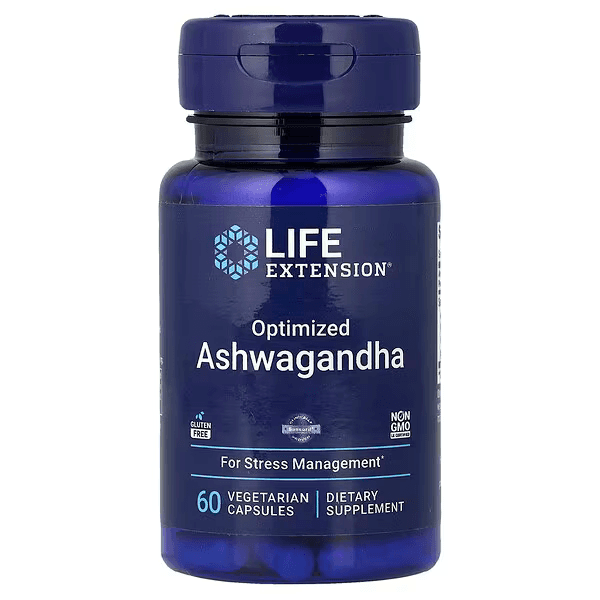
Life Extension
Optimized Ashwagandha
Sensoril® ashwagandha extract in vegetarian capsules.
- Format
- Vegetarian capsules
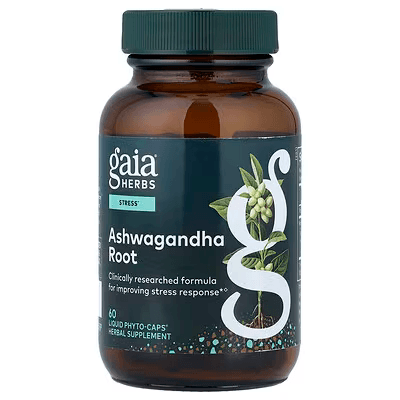
Gaia Herbs
Ashwagandha Root
Ashwagandha blend with 2.5 mg of labeled withanolides per capsule.
- Format
- Vegan liquid phyto-caps
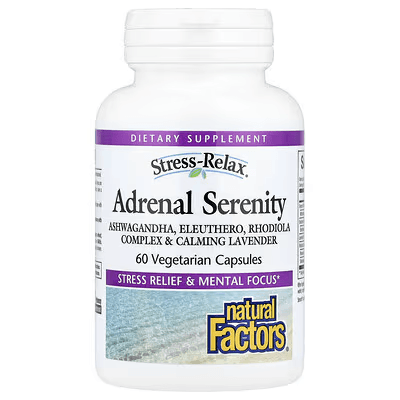
Natural Factors
Natural Factors Stress-Relax® Adrenal Serenity, 60 Vegetarian Capsules
Multi-herb adaptogen blend with Sensoril® ashwagandha, eleuthero, lavender, and rhodiola.
A four-herb adaptogen formula featuring Sensoril® ashwagandha, eleuthero, lavender, and rhodiola, in vegetarian capsules.
- Format
- Vegetarian capsules
- Package
- 60 vegetarian capsules
Ashwagandha Products
If you are considering an ashwagandha supplement, check the extract type, standardisation level, and serving size on the label. Speak with a healthcare professional if you have any health conditions or take medication.
Affiliate disclosure — This section may contain affiliate links. If you purchase through one of these links, ANIVO may earn a small commission at no extra cost to you. We only feature products we have reviewed editorially. This is not medical advice.

A Practice to Try
A short guided practice connected to this topic.
Nervous System Reset | Guided Breathwork
Beginner
A guided breathwork practice designed to help you explore short, intentional breathing patterns and return to a calmer state. This practice may support a sense of reset and nervous system awareness.
This practice is for educational purposes only and is not medical advice. If you feel unwell or have a medical condition, consult a qualified healthcare professional before starting any new practice.

Continue exploring
Discover guides, supplements, books, and practical resources for stress & mental balance.